
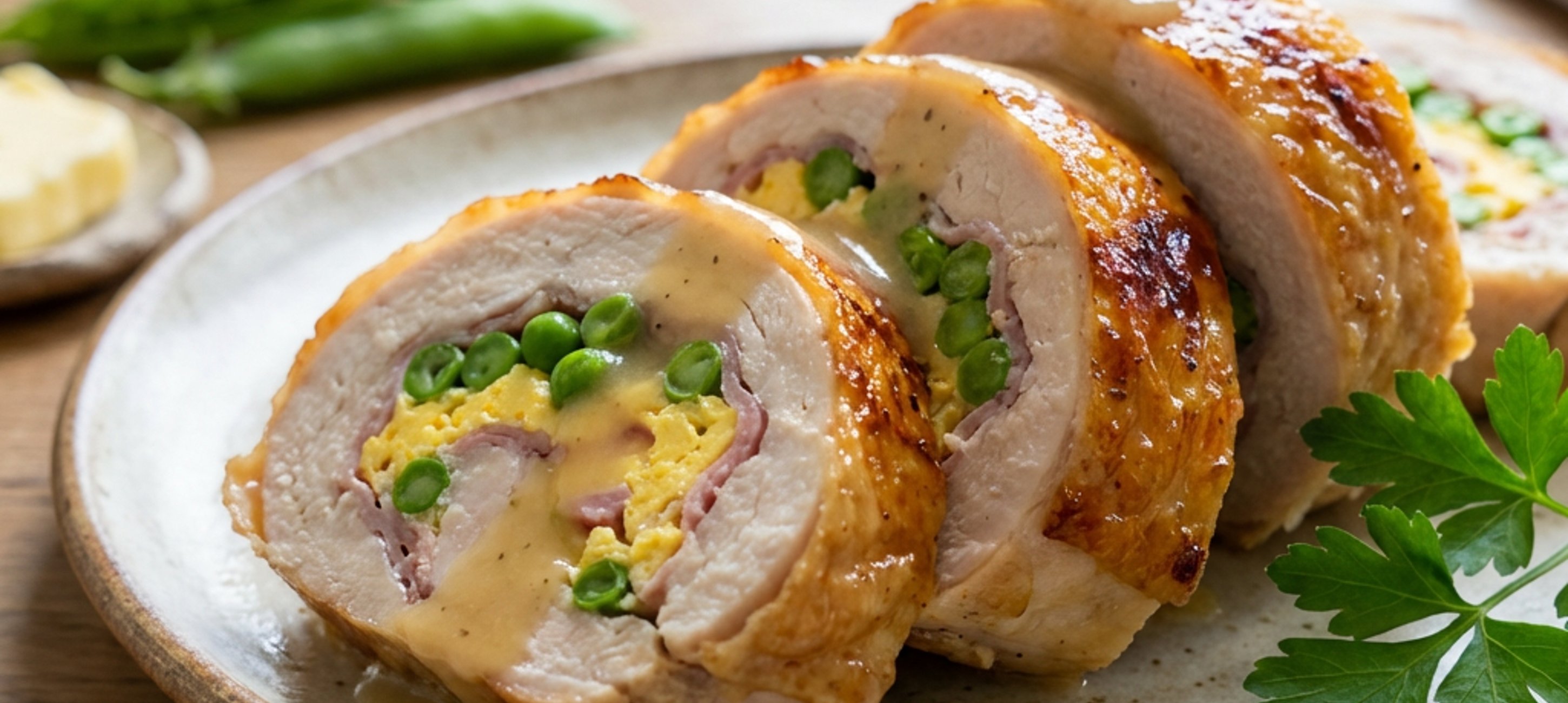
Buy all ingredients right below the recipe
ROULADE
- 1 deboned chicken, approx. 1.2 kg in original state
- 30 g frozen or freshly shelled peas
- 4-6 slices of ham, depending on size
- 1 bread roll, diced yesterday and left to air dry
- 3 tablespoons butter (2 for stuffing, 1 for gravy)
- 2 eggs
- 3 pinches of salt
GRAVY
- 1 level tablespoon all-purpose flour
Instructions
- 1Before you start deboning the chicken, heat a tablespoon of butter in a pan. Once it foams, pour in the eggs whisked with a pinch of salt and stir for about a minute or two over medium heat until the eggs curdle from the heat and you get scrambled eggs. Don't overdry them; there's no need to scramble them into a dry mass. Mix the scrambled eggs with frozen peas and transfer to a small plate to cool. Do not thaw the peas beforehand; there are only a few, and they will soften in the residual heat of the eggs.
- 2Debone the chicken and lay it skin-side down on a cutting board. If you feel the meat surface is too bumpy and uneven, cover the chicken with foil or a cut-open plastic bag and lightly pound it with a meat mallet. Start preheating the oven to 190 degrees Celsius.
- 3Mix the cooled eggs with the diced dried bread. Season the chicken surface with a pinch of salt and layer with ham slices. Where the chicken has breasts, spread the stuffing, then firmly roll it into the meat, so the thigh part of the meat remains on the outside. Cut about 1 meter of kitchen twine and tie a firm, tight loop at one end of the roulade. Then wrap the roulade at approximately two-centimeter intervals; don't be afraid to pull the twine tight. The meat will shrink and render fat in the oven, so make sure the loops don't loosen. At the end of the roulade, tie the end of the twine to the previous loop in any way; don't worry, even a simple knot won't easily come undone.
- 4Brush the surface of the roulade with the remaining butter and season with the remaining salt. Place it in a roasting pan, do not cover, put it in the oven, and leave it to its fate for 30 minutes.
- 5After 30 minutes, the chicken will start to brown, and pan drippings will form in the roasting pan. To get gravy, now pour 200 ml of water under the meat. Bake for another 30 minutes, checking every 10 minutes, basting the meat with the drippings, and ensuring there's enough liquid; if not, add a little more water. Basting the meat will make it brown more beautifully and also enhance the flavor of the drippings.
- 6Just before the meat is fully cooked, melt butter in a small saucepan. Add the flour to the foamed butter and stir with a spoon or small whisk over medium heat for several minutes until this roux turns light brown. You may need to gradually reduce the heat to prevent the roux from burning.
- 7Remove the baked roulade from the oven along with the roasting pan. Transfer the roulade to a plate or cutting board and strain the pan drippings through a sieve into the roux. Stir thoroughly immediately. If you end up with something between putty and glue, it means there was too little liquid in the roasting pan; therefore, add 100-150 ml of water to the saucepan, which should create a consistency much closer to a sauce. Let it simmer gently for at least 15 minutes (20 is better), stirring occasionally, and adding a splash of evaporated water if needed. To prevent the chicken roulade from cooling down in the meantime, return it to the empty roasting pan and place it in the turned-off oven, where it will finish cooking beautifully and become tender.
- 8Season the gravy with salt and pepper; it shouldn't need anything else.
- 9Remove the twine from the roulade and slice it into centimeter-thick pieces with a sharp knife. Serve with boiled potatoes or rice, drizzled with gravy.
Tip
If you make broth from the deboned chicken bones while the roulade bakes, use this nascent broth both for basting the chicken in the oven and for replenishing the liquid in the gravy in the saucepan. The difference is immense.

Kuchařka pro dceru
Jana Florentýna Zatloukalová is the author of the successful blog Kuchařka pro dceru.