
Buy all ingredients right below the recipe
INGREDIENTS
- 350 g all-purpose flour
- 225 ml milk
- 30 g fresh yeast
- 25 g granulated sugar
- 8 g salt
- 2 room temperature eggs (one for the dough, one for brushing)
- 1 room temperature egg yolk
- 50 g room temperature butter
- 1 teaspoon oil
- teaspoon sesame seeds
METHOD
- 1Crumble the yeast into a bowl, sprinkle with 10 g of sugar, and mash with a fork until the yeast softens, thins out, and forms a paste. Add 10 g of flour to it, mix again, and pour in 125 ml of lukewarm milk. Let it stand for 10 minutes in a quiet, draft-free place to form a thick leaven, which is a sign that the yeast is alive and active.
- 2Weigh 20 g of flour into a small saucepan and pour in the remaining 100 ml of milk. Whisk together and start heating on a hob set to medium heat. The mixture will begin to thicken before it comes to a boil, so keep stirring; it's a quick process. First, a coarse paste will form, but immediately after, a thick mass. Remove from heat immediately and scrape the mixture, called tang zhong, onto a small plate to cool before using it in the dough.
- 3Measure the remaining 330 g of flour, 10 g of sugar, and salt into a bowl and mix briefly. Add the egg and egg yolk, the risen leaven, and the cooled tang zhong, and begin to process the dough with a stand mixer fitted with a dough hook on low speed. At first, it will be very coarse and wet, but once everything combines, you can gradually increase the speed to about half power. After approximately 10 minutes of kneading, the sides of the bowl will essentially clean themselves, and the dough will no longer be sticky and wet. You'll also know it's ready because it will be soft and smooth, almost like a baby's skin.
- 4Add the cubed butter to the soft dough. However, not all at once, but one piece after another. Continue kneading, and only add the next piece of butter once the previous one has been fully absorbed without a trace.
- 5Transfer the kneaded, still slightly sticky dough to a bowl greased with a teaspoon of oil, cover the bowl with a damp cloth, and let it rise in a quiet place for an hour, until the dough doubles in volume.
- 6Deflate the risen dough, press out the air, and turn it out onto a lightly floured work surface. Divide into 8 equal parts.
- 7From each piece, form something like a ball, place it on a mat, and gently flatten it with your palm. Then, gradually fold the edges of the flattened piece back towards the center all around its circumference, until it looks like you've created a small knot. Turn the bun over, bottom side up; you'll see what the nascent bun will look like. Place it about 30 cm from the edge of your work surface, place your palms on both sides of it, and using opposing hand movements, slide the bun with a rotating motion across the work surface towards you.
- 8Arrange the prepared buns with sufficient spacing on a baking sheet lined with baking paper, preventively brushed with a thin layer of oil. Cover with an inverted deep baking sheet and let the buns rise for 45-60 minutes until they double in volume. Towards the end of the rising time, preheat the oven to 190 degrees Celsius without convection (or 175 degrees Celsius with convection, if no other option).
- 9In a bowl, whisk the egg (or leftover egg white) with 20 ml of cold water or milk using a fork. Continue until the mixture is very thin and liquidy; this will take about a minute. Brush the surface of the buns with this egg wash, sprinkle with sesame seeds, and place into the hot oven.
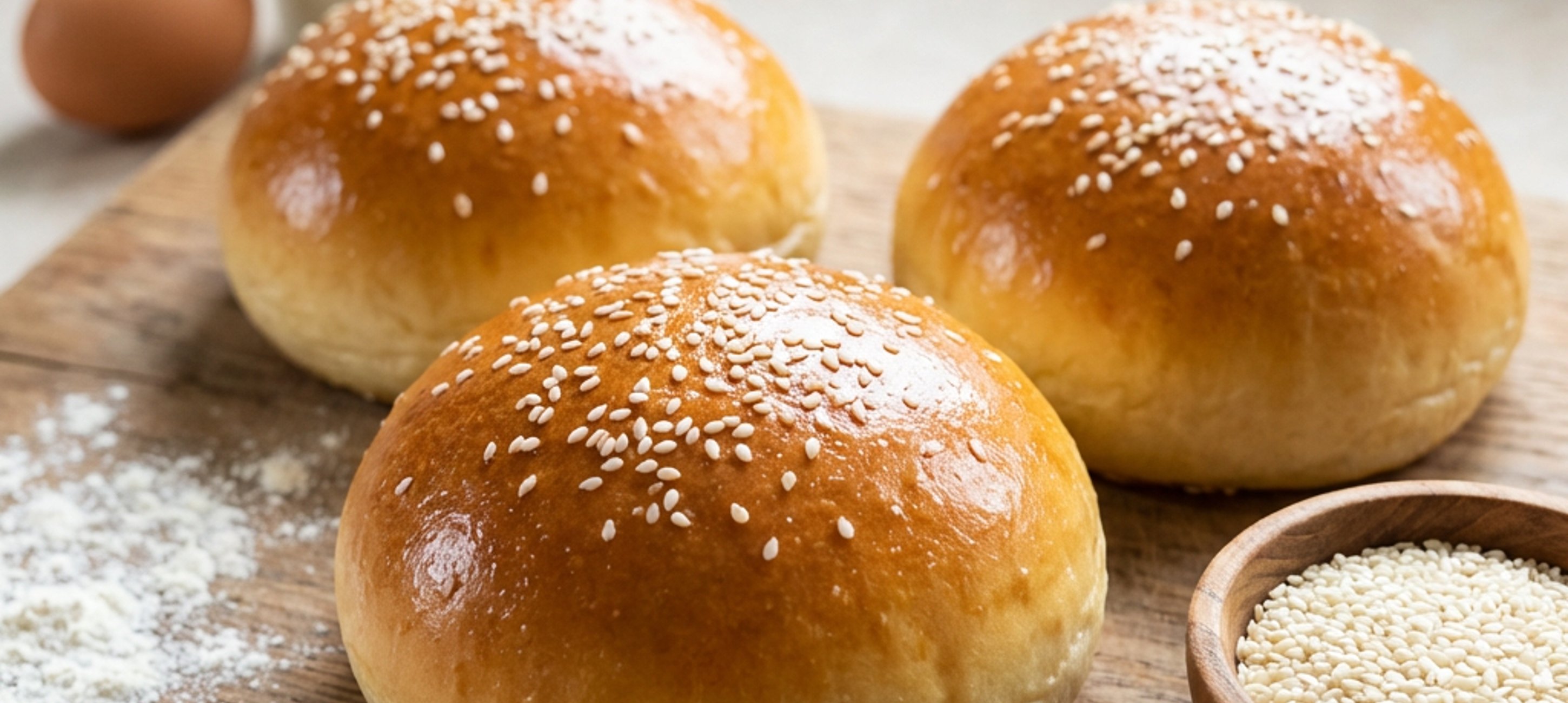
- 10Bake for 18-20 minutes. The surface of the baked hamburger buns should be richly golden, shiny, and smooth, and the buns firm. If the surface starts to brown too quickly and risks burning, cover the pastry from above with aluminum foil.
- 11Let cool on a wire rack. Once you slice, toast, and turn these buns into a true homemade burger, I cannot be held responsible for anything you do in a state of blissful trance.
Tip
If you want all the buns to be exactly the same, divide the dough after rising so that each piece weighs around 85-87 grams.

Kuchařka pro dceru
Jana Florentýna Zatloukalová is the author of the successful blog Kuchařka pro dceru.